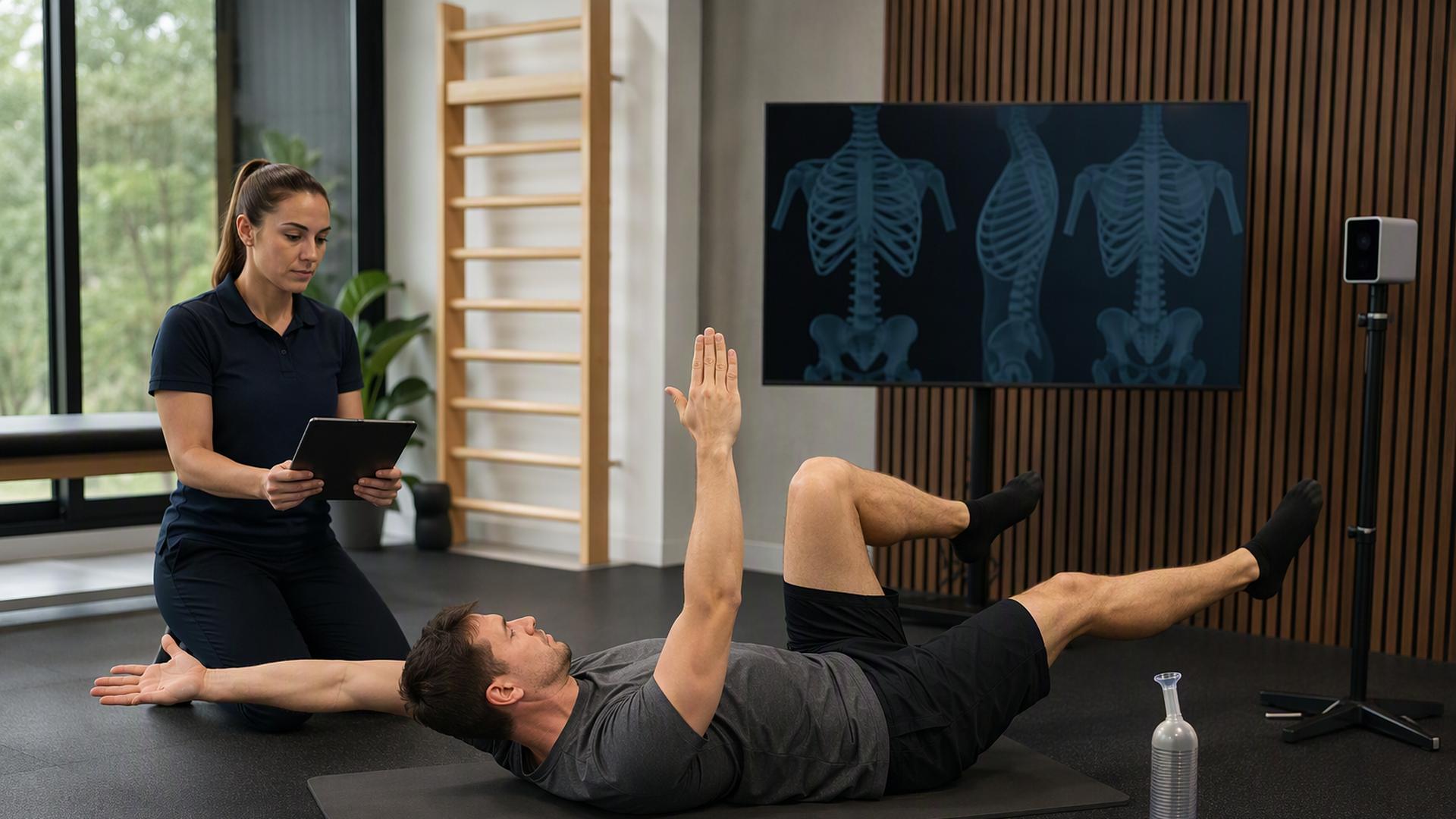
Look at enough gym photos and you will notice that some people's lower ribs sit out, leaving a visible step beneath the chest. Social media is full of cues and drills promising to pull them back in. Some of those drills help. Others cannot touch the real cause, and knowing the difference saves months of effort.
Rib flare describes lower ribs that angle outward instead of sitting flat against the abdomen. It can be symmetrical or one-sided, subtle or obvious, and it may cause no symptoms at all. In some people it comes with a feeling of tightness, back discomfort or shallow breathing.
The page on Marco Scarci rib flare treatment from the practice of Mr Marco Scarci, a consultant thoracic surgeon, lists the kinds of cause it considers, which include muscle weakness and poor posture, changes after pregnancy, curvature of the spine, and the effects of trauma or earlier surgery. It also says that assessment includes checking for associated slipping rib syndrome.
That list matters, because causes differ in what they respond to. A posture habit and a change in the shape of the cartilage are different problems. Treating them as the same is why some people train for a year without any change in how their ribs look or feel.
Many people first notice rib flare after pregnancy. During pregnancy the ribcage widens to make room for the growing uterus, and the abdominal wall stretches. Oxford University Hospitals explains in its patient leaflet on recti diastasis that pregnancy hormones soften connective tissue, making it more stretchy, and that the connective tissue between the two sides of the abdominal muscle softens and stretches as the uterus grows.
The same leaflet notes that if you have recti diastasis, your abdominal muscles may be weaker, and that weak abdominal muscles can be linked to back pain and reduced control when moving. When the front of the abdomen offers less support, the lower ribs can drift outward, and people often stand and breathe in ways that keep them there.
For many people, rebuilding strength and control over the months after birth brings the ribs back toward their earlier position. Others find that some flare remains.
Breathing habits change too. Late in pregnancy the diaphragm is pushed upward, and many people breathe with the upper chest and flared lower ribs to compensate. After delivery, the habit can persist even though the space has returned. A physiotherapist can retrain breathing so that the ribs expand sideways and back during inhalation and settle on the exhale, which is a skill that takes weeks of practice rather than days.
When flare comes from habit and weakness, training helps. Physiotherapists commonly work on breathing patterns that let the lower ribs expand sideways and back, on the deep abdominal muscles that draw the ribs down and in, and on posture of the pelvis and upper back. A rib position that changes when you are cued to breathe or stand differently suggests a functional cause that training can address.
Mr Scarci's practice takes the same line. It states that rib flaring due to muscle weakness and poor posture should be addressed with physiotherapy and core strengthening before surgery is considered.
Good programmes are specific and gradual. They teach control before load, test progress by how the ribs sit during real tasks and are built with a professional who has examined the person, rather than a video alone. Progress is usually measured over months, so patience and a realistic timetable matter more than intensity.
Some flare is structural. If the cartilage that joins the ribs to the breastbone has an established shape, or if the ribcage is tilted by curvature of the spine, no number of planks will change its form. Training can improve strength and comfort, but it cannot remodel cartilage or bone.
The practice explains that surgical correction typically involves partial resection or reshaping of the protruding costal cartilage, and that assessment may include a CT scan. It lists conditions such as persistent protruding lower ribs, visible chest asymmetry, post-pregnancy flare, breathing discomfort and failed conservative treatment as reasons for consultation.
It is worth being realistic about goals. Surgery for a purely cosmetic flare is rarely needed, and the practice itself indicates that it is considered when the flare forms part of a more significant chest wall deformity or causes functional problems. That is a sensible threshold for most people. Ask what the numbers mean.
See a doctor if ribs flare on one side only, if pain accompanies the shape, if breathing feels restricted or if the shape has changed after an injury or operation. Those features can point to a cause that needs more than exercise.
A sensible path begins with a physiotherapist who understands breathing and trunk control. If three to six months of well-guided work brings no change, or if a scan would help to decide, a thoracic surgeon can assess the ribs, the cartilage and any slipping rib component.
Bring photographs taken in the same position over time, a note of any pregnancy or surgery and a list of what you have tried. That record shortens the first consultation and helps the surgeon give practical advice. If the flare appeared suddenly, if there is a lump, or if a click accompanies it, mention that as well, since those features change the possible causes.
